



 info@serenitymedspaga.com
 (912)561-6040

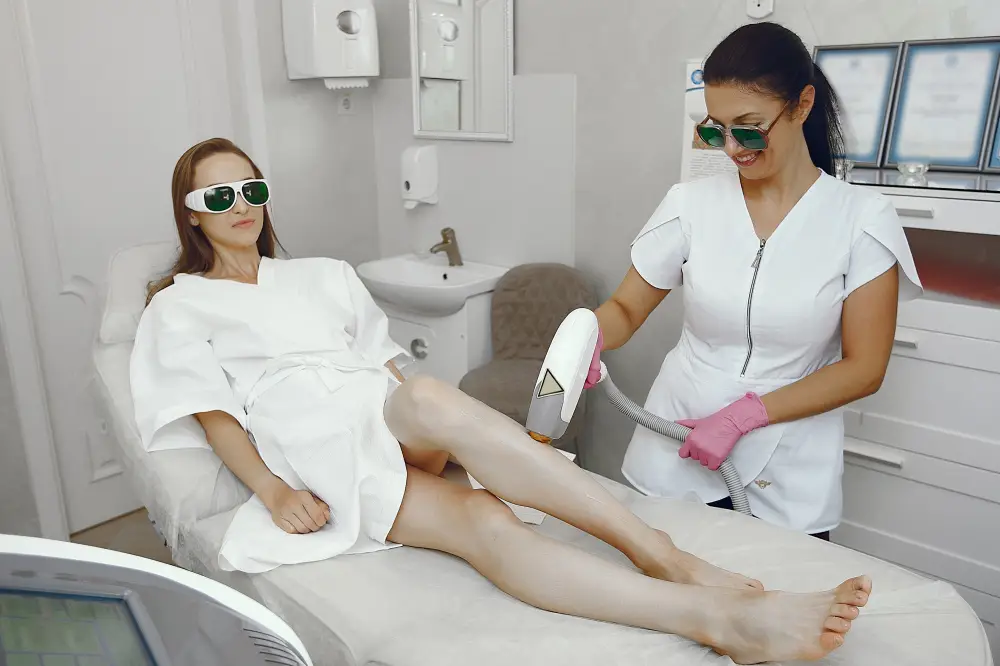
For decades, laser hair removal was considered off-limits for darker skin tones, and for good reason. Early lasers carried a real risk of burns, hyperpigmentation, and scarring on melanin-rich skin. But the technology has fundamentally changed. Today, with the right laser and a skilled provider, laser hair removal for dark skin is not only safe but highly effective. This guide explains why, and what makes the Motus AZ+ a genuine breakthrough for patients with deeper skin tones.
Why Traditional Lasers Were Risky for Dark Skin
To understand why the technology has changed, it helps to understand what went wrong with the original approach.
Laser hair removal works by targeting melanin, the pigment found in hair follicles. The laser energy is absorbed by the melanin in the follicle, generating heat that disrupts the follicle’s ability to regrow hair. The problem with early lasers was simple but consequential: they couldn’t distinguish between the melanin in the hair follicle and the melanin in the surrounding skin.
For patients with darker skin tones, classified as Fitzpatrick types IV through VI, this meant laser energy scattered into the skin itself rather than staying concentrated in the follicle. The results ranged from temporary irritation to serious outcomes including burns, blistering, and permanent changes in pigmentation.
The Alexandrite laser at 755 nm was once the industry standard for hair removal. Historically, Alexandrite lasers were associated with a higher risk of complications in darker skin tones because their wavelength is strongly absorbed by epidermal melanin.
This history left a lasting impression. Many darker-skinned patients came to believe that laser hair removal simply was not designed for them. That belief was accurate for the technology of that era. It is no longer accurate today. Modern systems and experienced providers can treat darker skin safely, but Nd:YAG technology remains the preferred choice for deeper skin tones.
How the Motus AZ+ Is Different
The Motus AZ+ addresses the core limitation of traditional lasers through a combination of dual- wavelength technology, a patented delivery system, and built-in cooling that together make treatment safe across all skin tones.
The system combines two wavelengths in one platform: the 755 nm Alexandrite for lighter skin tones and the 1064 nm Nd:YAG for deeper skin tones. This dual-wavelength capability means the same device can be calibrated appropriately for any patient, regardless of where they fall on the Fitzpatrick scale.
The 1064 nm Nd:YAG wavelength is the key to safe treatment on darker skin. This wavelength penetrates deeper into the follicle while bypassing the superficial layer of the skin where surface melanin is concentrated. Because the energy travels past the skin’s upper layer before activating, it disrupts the follicle without the thermal damage to surrounding tissue that caused problems with older systems.
The Motus AZ+ , at our practice covering Pooler, Savannah, and nearby cities in GA, uses Moveo technology, a patented motion-based delivery system that distributes energy evenly across the skin surface as the handpiece moves. Traditional laser delivery fires energy in single pulses, which can create hot spots where energy accumulates unevenly. Moveo’s continuous motion approach eliminates this risk by distributing the same total energy over a broader, more consistent area.
Built-in contact cooling works alongside the Moveo system to protect the skin surface during treatment, further reducing discomfort and preventing post-treatment irritation.
The result is that darker-skinned patients receive the same follicle-disrupting energy needed for effective hair reduction without the surface skin damage that made older technology unsuitable for their skin type.
Understanding the Fitzpatrick Scale: Where Does Your Skin Tone Fall?
The Fitzpatrick scale is a clinical classification system that categorizes skin types based on their melanin content and how they respond to sun exposure. It is the standard reference used by laser providers to determine appropriate treatment settings.
| Fitzpatrick Type | Skin Description | Traditional Laser Safety | Motus AZ+ |
|---|---|---|---|
| I to II | Very fair, always burns | Safe with most lasers | Safe |
| III to IV | Light brown to medium brown | Moderate risk | Safe |
| V to VI | Dark brown to very dark | High risk with older lasers | Safe with Nd:YAG |
Types V and VI represent the skin tones historically most affected by laser complications, and they are precisely the tones for which the Nd:YAG 1064 nm wavelength was developed and validated.
At Serenity MedSpa, every patient receives a skin tone assessment at consultation before any treatment begins. This assessment determines the correct wavelength, energy settings, and treatment protocol specific to that patient’s skin. No two patients are treated identically, and the settings used for a Fitzpatrick IV patient are meaningfully different from those used for a Fitzpatrick VI patient, even on the same device.
Does Laser Hair Removal Work as Well on Dark Skin?
This is the question patients most often ask after confirming that the procedure is safe, and the answer is yes, with the right technology.
When performed using the correct laser system with appropriate settings and treatment protocols, results for darker skin patients are comparable to those achieved on lighter skin tones. The underlying mechanism is the same: the laser’s energy is absorbed by the hair follicle, generates heat, and disrupts the follicle’s growth cycle. What changes is the wavelength and the calibration, not the effectiveness of the process itself.
One characteristic that works in favor of darker skin patients is hair type. Most patients with darker skin tones have coarse, dense, dark hair. Coarse dark hair absorbs laser energy exceptionally well because the melanin concentration in each follicle is high. The contrast between the hair follicle’s melanin and the surrounding dermal tissue, even on dark skin, is sufficient for the Nd:YAG to target effectively.
Darker skin patients may require slightly more sessions, typically eight to ten compared to six to eight for lighter skin tones. This is because the energy settings used for safety on darker skin are more conservative, meaning each session delivers a somewhat more gradual result. The total outcome remains the same; the timeline is modestly longer.
It is worth noting that this limitation applies equally to all skin tones when it comes to hair color. Blonde, red, gray, and white hair do not respond well to laser treatment on any skin type because these colors lack the melanin concentration that laser energy needs to target. For patients with dark coarse hair, regardless of their skin tone, the Motus AZ+ delivers consistent and effective results.
Common Treatment Areas for Darker Skin Patients
At Serenity MedSpa, the following areas are among the most frequently requested by patients with darker skin tones:
Underarms are one of the most popular requests. Beyond removing unwanted hair, laser treatment in this area also benefits patients who have developed hyperpigmentation from years of frequent shaving, a common concern among darker-skinned patients.
Bikini and Brazilian treatments are frequently requested, particularly among patients who experience ingrown hairs and razor bumps from traditional hair removal methods. Pseudofolliculitis barbae, the clinical term for razor bump-related inflammation, is significantly more prevalent in patients with curly or coarse hair and is one of the most compelling medical reasons to consider permanent hair reduction.
Face treatments including the upper lip, chin, and sideburns are especially valuable for Black women experiencing hormonal facial hair growth. The precision of the Motus AZ+ makes facial treatment both safe and effective for darker skin tones where older lasers posed the greatest risk of pigmentation changes.
Legs are a popular choice for patients looking to reduce the need for daily shaving, particularly heading into warmer months. Full and lower leg treatments are both available.
Back and chest treatments are frequently requested among darker-skinned male patients seeking long-term reduction of body hair.
What to Expect During Your Treatment in Pooler, GA
Knowing what the process looks like from start to finish makes it easier to commit to a treatment plan and follow it consistently.
Consultation first. Before any treatment takes place, a provider at Serenity MedSpa will assess your skin tone, hair type, and relevant medical history. This appointment establishes the correct wavelength and energy settings for your specific profile and sets expectations for the number of sessions and spacing that will work best for you.
Preparation before your session. Shave the treatment area 24 hours before each appointment. Shaving removes the visible hair above the skin while leaving the follicle intact, allowing the laser to target the follicle directly. Waxing, plucking, or threading must be avoided for at least four weeks before a session because these methods remove the follicle temporarily and eliminate the laser’s target.
During the session. The Motus AZ+ Move delivery system makes treatment significantly more comfortable than traditional lasers. Most patients describe the sensation as mild warmth rather than the sharp snapping feeling associated with older pulse-based devices. The continuous motion of the handpiece distributes the energy more evenly, reducing the peaks of discomfort that characterized earlier systems.
After your session. Mild redness for one to two hours following treatment is normal and resolves quickly. Sun exposure should be avoided for two weeks post-treatment, and consistent SPF application is especially important for patients with darker skin to prevent post-inflammatory hyperpigmentation. This is not a limitation unique to laser treatment; it is a standard skincare practice that simply becomes mor important during the treatment period Session spacing. Sessions are spaced four to eight weeks apart to align with the natural hair growth cycle Laser treatment is only effective on follicles in the active growth phase, and not all follicles are in this
phase simultaneously. Consistent spacing across multiple sessions ensures that all follicles in th treatment area are addressed over time.
How Many Sessions Will You Need?
Most patients with darker skin tones achieve optimal, long-lasting hair reduction after eight to ten sessions, although individual results may vary. Results begin to become visible after two to three sessions, and significant reduction is typically achieved by sessions five and six.
Several individual factors influence the total number of sessions needed: hair density in the treatment area, the specific body area being treated, hormonal activity that may continue stimulating follicles, and consistency in keeping scheduled appointments. Patients who miss sessions or extend the spacing beyond the recommended window may need additional treatments to achieve the same outcome.
For a full breakdown of how many sessions each body area typically requires, read our complete sessions guide.
Laser Hair Removal for Dark Skin at Serenity MedSpa, Pooler, GA
Serenity MedSpa is equipped with the Motus AZ+, one of the most advanced dual-wavelength laser systems available for safe and effective treatment across all skin tones. Every treatment plan is personalized based on a thorough skin tone and hair type assessment, and providers bring specific expertise in treating patients across the full Fitzpatrick range.
Serenity MedSpa serves patients in Pooler, Savannah, and surrounding areas throughout Coastal Georgia.
Frequently Asked Questions
Q1. Can Black people get laser hair removal?
Ans- Yes. With the right laser technology, specifically the Nd:YAG 1064 nm wavelength used in the Motus AZ+, laser hair removal is safe and effective for Black skin and other darker skin tones. The key is working with a provider who has the appropriate equipment and the training to calibrate it correctly.
Q2. What is the best laser for dark skin?
Ans- The Nd:YAG 1064 nm laser is widely recognized as the gold standard for Fitzpatrick skin types IV through VI. The Motus AZ+ system includes this wavelength alongside Move motion technology and contact cooling, making it one of the most advanced and safe options available for darker-skinned patients.
Q3. Does laser hair removal cause hyperpigmentation on dark skin?
Ans- When performed with the correct laser settings, wavelength, and after care, the risk is significantly reduced. The concern arises with outdated Alexandrite-only systems used on darker skin. The Nd:YAG wavelength used at Serenity MedSpa is specifically designed to bypass surface melanin, significantly reducing hyperpigmentation risk when combined with proper post-treatment care.
Q4. Is laser hair removal painful for darker skin tones?
Ans- The Motus AZ+ is among the most comfortable hair removal lasers available. The Move continuous motion delivery distributes energy evenly across the skin, avoiding the concentrated pulses that caused discomfort in older devices. Many darker-skinned patients report experiencing mild warmth during treatment rather than sharp or significant discomfort.
Q5. How is laser hair removal for African American skin different from other skin types?
Ans- The difference is primarily in the wavelength selection and energy calibration, not in the process itself. African American skin and other very deep skin tones require the Nd:YAG 1064 nm wavelength, more conservative energy settings, and careful post-treatment sun protection. With these adjustments in place, the treatment process and the results are fully comparable to those achieved on lighter skin.
Ready for Smooth Skin with our Experienced Team in Pooler, GA
If you have been holding back from laser hair removal because of concerns about safety on your skin tone, those concerns were valid for the technology of the past. They do not need to hold you back today.
The Motus AZ+ at Serenity MedSpa was built to treat every skin tone safely and effectively, and the team here has the expertise to match the technology.
Book your free consultation at Serenity MedSpa. We are conveniently located in Pooler, GA and serve Savannah, Richmond Hill, and other nearby towns. Contact us today and receive a personalized treatment plan built specifically for your skin tone and your goals.